
DENTAL X-RAY
This is for informational purposes only. For medical advice or diagnosis, consult a professional.
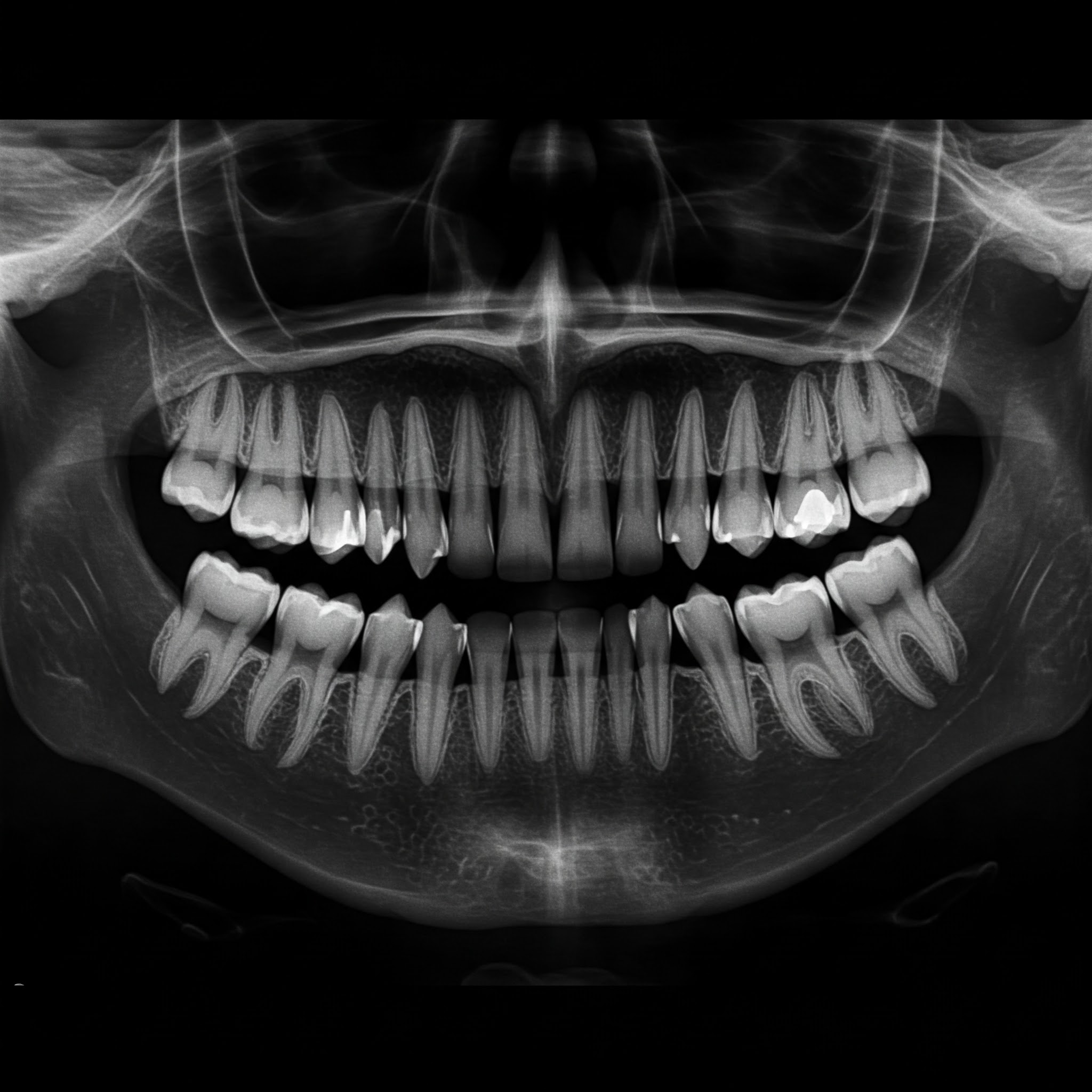
Dental X-rays are an essential part of modern dental care. They use low levels of radiation to capture images of your teeth, jawbone, and surrounding structures, allowing dentists to detect issues that may not be visible during a regular oral exam.
Types of Dental X-rays:
There are several types of dental X-rays, each serving a specific purpose:
Intraoral X-rays: These are the most common type and involve placing the X-ray film inside the mouth. Types of intraoral X-rays include:
Bitewing X-rays: Show the crowns of the upper and lower teeth in a specific area, used to detect cavities between teeth.
Periapical X-rays: Show the entire tooth, from crown to root, and the surrounding bone, used to detect problems below the gum line.
Occlusal X-rays: Show the entire arch of teeth in either the upper or lower jaw, used to detect impacted teeth or jaw abnormalities.
Extraoral X-rays: These are taken with the X-ray film outside the mouth. Types of extraoral X-rays include:
Panoramic X-rays: Capture a wide view of the entire mouth, including all teeth, jawbones, and sinuses, used to assess overall oral health and plan for treatments like implants or orthodontics.
Cephalometric X-rays: Show the entire side of the head, used for orthodontic treatment planning and analysis of facial growth.
What Dental X-rays Show:
Dental X-rays can help detect a variety of dental problems, including:
Cavities (tooth decay)
Impacted teeth
Gum disease (periodontal disease)
Bone loss
Abscesses or infections
Tumors or cysts
Developmental abnormalities
As low as
299.00 100.00