
COMPLETE BLOOD COUNT (CBC) WITH DIFFERENTIAL
What does a CBC with Differential measure?
The CBC with Differential measures several components of your blood, including:
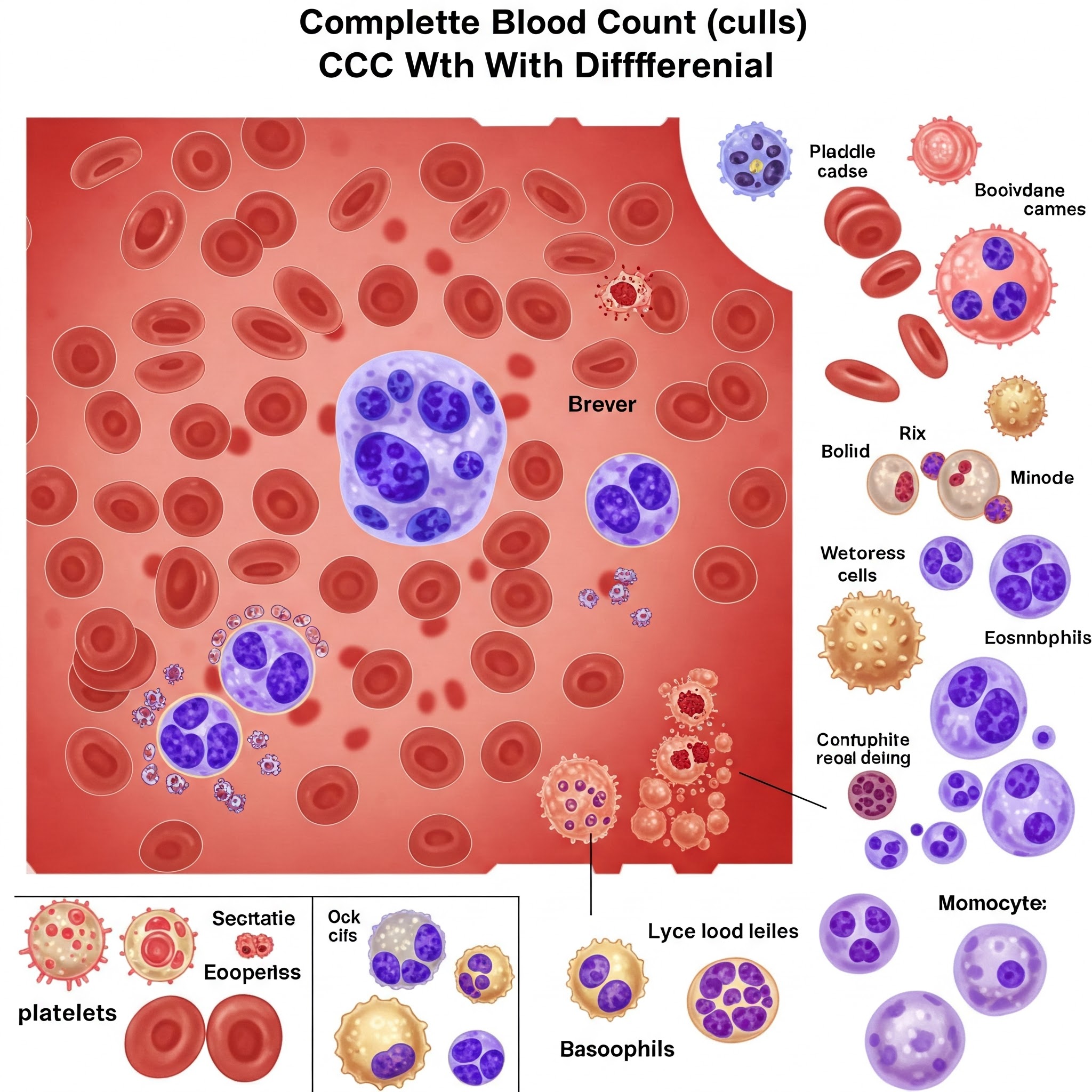
White Blood Cells (WBCs): These are your body's defense against infections. The test measures the total number of WBCs and also provides a breakdown of the different types of WBCs, which is called the differential. The different types of WBCs include:
Neutrophils: Fight bacterial infections.
Lymphocytes: Fight viral infections and play a role in the immune system.
Monocytes: Help remove dead cells and debris.
Eosinophils: Fight parasitic infections and are involved in allergic reactions.
Basophils: Involved in allergic reactions.
Red Blood Cells (RBCs): These carry oxygen throughout your body. The test measures:
Red Blood Cell count: The total number of RBCs.
Hemoglobin (Hgb): The protein in RBCs that carries oxygen.
Hematocrit (Hct): The percentage of your blood that is made up of RBCs.
Mean Corpuscular Volume (MCV): The average size of your RBCs.
Mean Corpuscular Hemoglobin (MCH): The average amount of hemoglobin in your RBCs.
Mean Corpuscular Hemoglobin Concentration (MCHC): The average concentration of hemoglobin in your RBCs.
Red Blood Cell Distribution Width (RDW): Measures the variation in the size of your RBCs.
Platelets: These help your blood clot. The test measures:
Platelet count: The total number of platelets.
Mean Platelet Volume (MPV): The average size of your platelets.
Why is a CBC with Differential performed?
A CBC with Differential is performed for various reasons, including:
To evaluate your overall health.
To diagnose infections.
To diagnose anemia (low red blood cell count).
To diagnose blood disorders, such as leukemia.
To monitor treatment for certain conditions.
What do the results mean?
Abnormal results on a CBC with Differential can indicate a variety of conditions. For example:
High WBC count: May indicate an infection, inflammation, or certain types of cancer.
Low WBC count: May indicate an infection, autoimmune disorder, or bone marrow problem.
Low RBC count, hemoglobin, or hematocrit: May indicate anemia.
High or low platelet count: May indicate a bleeding disorder or other medical condition.
It's important to note that abnormal results on a CBC with Differential don't always mean you have a serious medical condition. Your doctor will interpret the results in the context of your medical history and other test results to make an accurate diagnosis.
If you have any concerns about your blood health, it's important to talk to your doctor. They can order a CBC with Differential and other necessary tests to help diagnose any underlying conditions.
As low as
550.00 150.00